Patient Education for Older Adults: What Changes
The content of the plan rarely needs to change. The way it travels does.
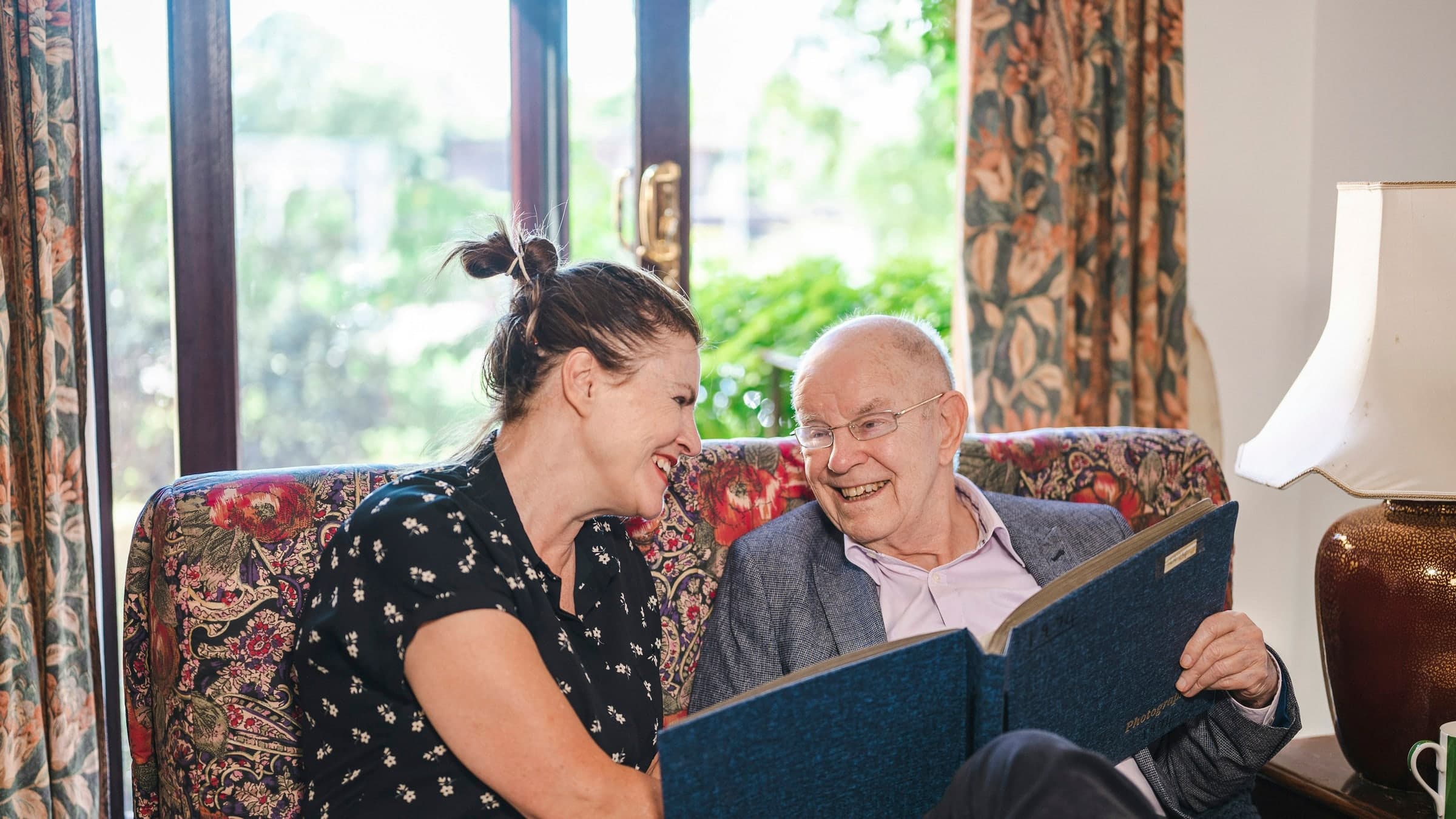
An older patient listens to the plan for a new medication, nods, and thanks the clinician. A daughter waits in the hallway. That evening, neither of them is sure whether the tablet is taken with breakfast or at bedtime.
Patient education for older adults rarely needs different content. It needs a different delivery. Many older patients have hearing loss or limited health literacy, many recall little of what was said, and many come with a companion. So the key steps belong on paper, in larger print, explained face to face and shared with the person who helps at home.
The content of the plan rarely needs to change. The way it travels does.
Hearing loss is common and easy to miss
In a national sample of adults 70 and older who had their hearing tested, 63.1 percent had hearing loss (opens in a new tab). Hearing aids were used by 40 percent of those with moderate loss and by 3.4 percent of those with mild loss.
Many of these patients hear the visit without a hearing aid.
A national survey of more than 122,000 adults (opens in a new tab) found that people who reported hearing loss rated communication with their physicians lower. Their odds of a rating above the median were about 10 percent lower. The effect was modest, hearing was self reported, and the study cannot show cause. The authors pointed to noisy rooms and unfamiliar medical terms as likely reasons.
A patient who missed a word will not always say so. What is written down does not depend on hearing it.
Memory and health literacy shape what goes home
In the 2003 National Assessment of Adult Literacy (opens in a new tab), adults 65 and older had lower average health literacy than every younger age group. Among them, 29 percent scored Below Basic and 30 percent Basic. Only 38 percent reached Intermediate, compared with 53 to 58 percent in the other age groups.
Memory is part of the reason. In a study of 414 adults aged 60 and older (opens in a new tab) living independently in New York, impaired recall and verbal fluency were strongly associated with inadequate health literacy, independent of education. The authors suggested "reducing the cognitive burden of health information."
Spoken instructions are where that burden shows. In a study of 755 patients aged 55 to 74 (opens in a new tab), participants watched short videos of a doctor giving instructions and were asked what they remembered. Patients with adequate health literacy recalled more. Still, the authors found overall recall "poor" at every literacy level. Only 28.5 percent recognized pain as a sign of wound infection, and 40.5 percent recalled when to take their reflux pills.
Those are the details a patient needs at home: what to watch for and when to take the medication.
Many older patients bring a companion
In a survey of 12,018 Medicare beneficiaries (opens in a new tab) aged 65 and older, 38.6 percent said they were usually accompanied to routine visits. Those patients were older, less educated and in worse health than those who came alone.
The companions did more than drive. Among them, 44.1 percent wrote down the physician's instructions, 41.1 percent asked questions, and 29.7 percent explained the instructions to the patient. Accompanied patients were more satisfied with how their physician gave information. The survey measured satisfaction, not outcomes.
The companion is part of the audience. A plan written only for the person in the exam chair leaves out the person who may manage the pill box.
What older adults say they want on paper
A scoping review of 20 studies (opens in a new tab) from high income countries asked what format older adults prefer. They preferred written information from their health professional, or a version they could download. They wanted a logical layout, signposted sections, larger text and labelled pictures. Apps, group classes and online courses were less popular.
That is a list of preferences, not a trial result. It still points the same way as the studies above.
A checklist for patient education with older adults
Each item keeps the clinical decision with the clinician. It changes how the decision reaches home.
In the room
Ask whether the patient can hear well in this room, and lower background noise where possible.
Name the one or two things to do first before anything else.
Invite the companion into the explanation, with the patient's permission.
Ask the patient, or the companion, what they will do first when they get home. The teach back method describes how.
On the page
Use larger type, plain headings and the most important step first. The steps for writing a usable handout apply here too.
Write the time and the meal for each medication: "I will take ____ at ____ with ____."
Name the warning signs in words the patient uses, and who to call.
Give a printed copy, and a second copy for the person who helps at home.
Ready plans can start that work for problems common in later life, such as recurrent falls, age related hearing loss or mild cognitive impairment. The clinician still decides what applies.
Older patients do not need less information about their care. They need it in a form that survives the trip home.
Let's Complete the Care.