The Four Pillars of Better Patient Education
I believe better patient education starts with four practical standards: Relatable, Readable, Actionable, and Recognizable.
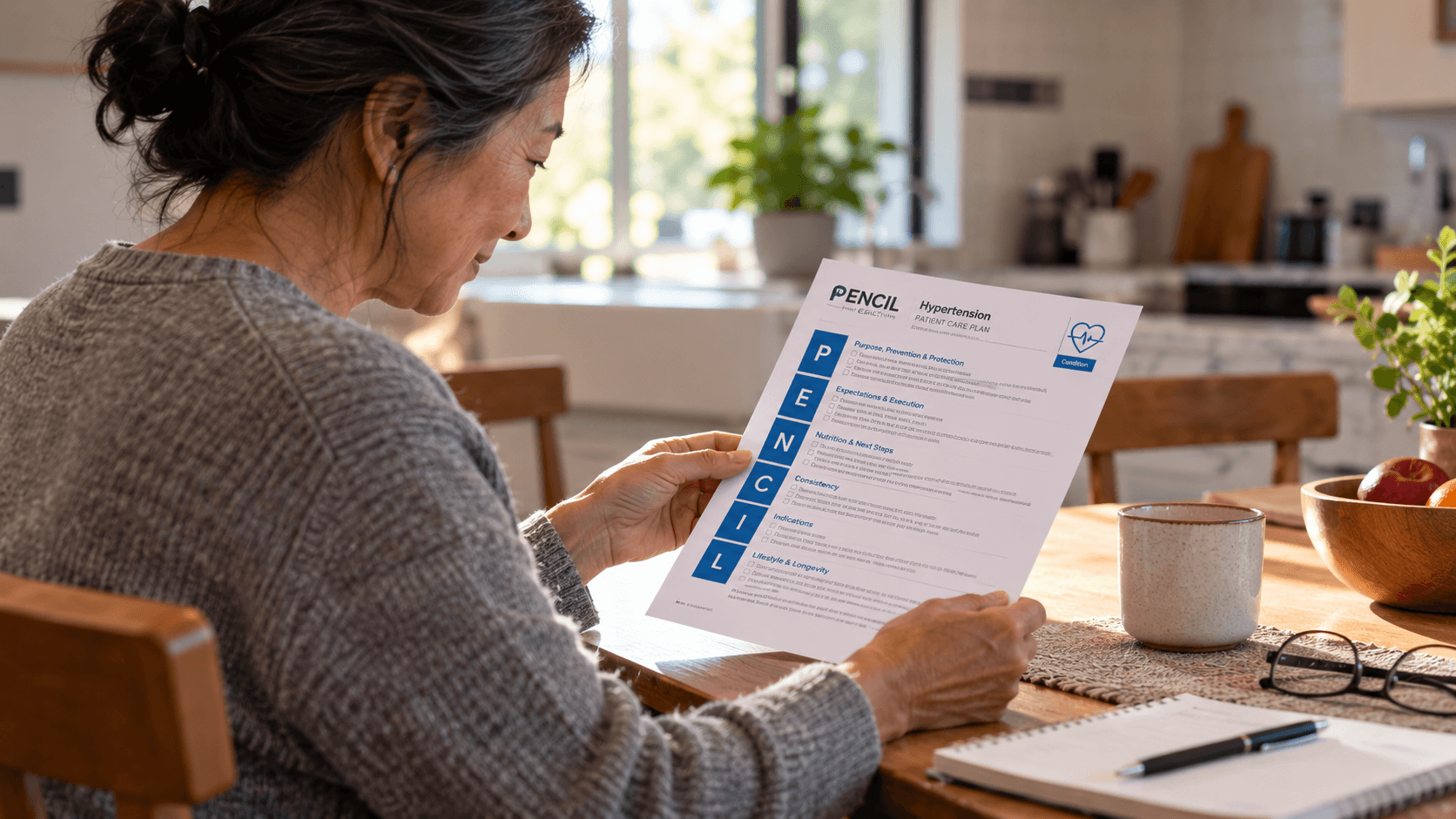
A patient can leave a medical appointment with a diagnosis, a prescription, and a follow up date, yet still be unsure what to do when they get home.
We may have explained the treatment carefully. We may have documented everything. But there is another question we need to ask: Did the patient leave with a clear written care plan they can understand and use?
That question is at the heart of my book, The Illusion of Care, and the work I am doing through PENCIL Health.
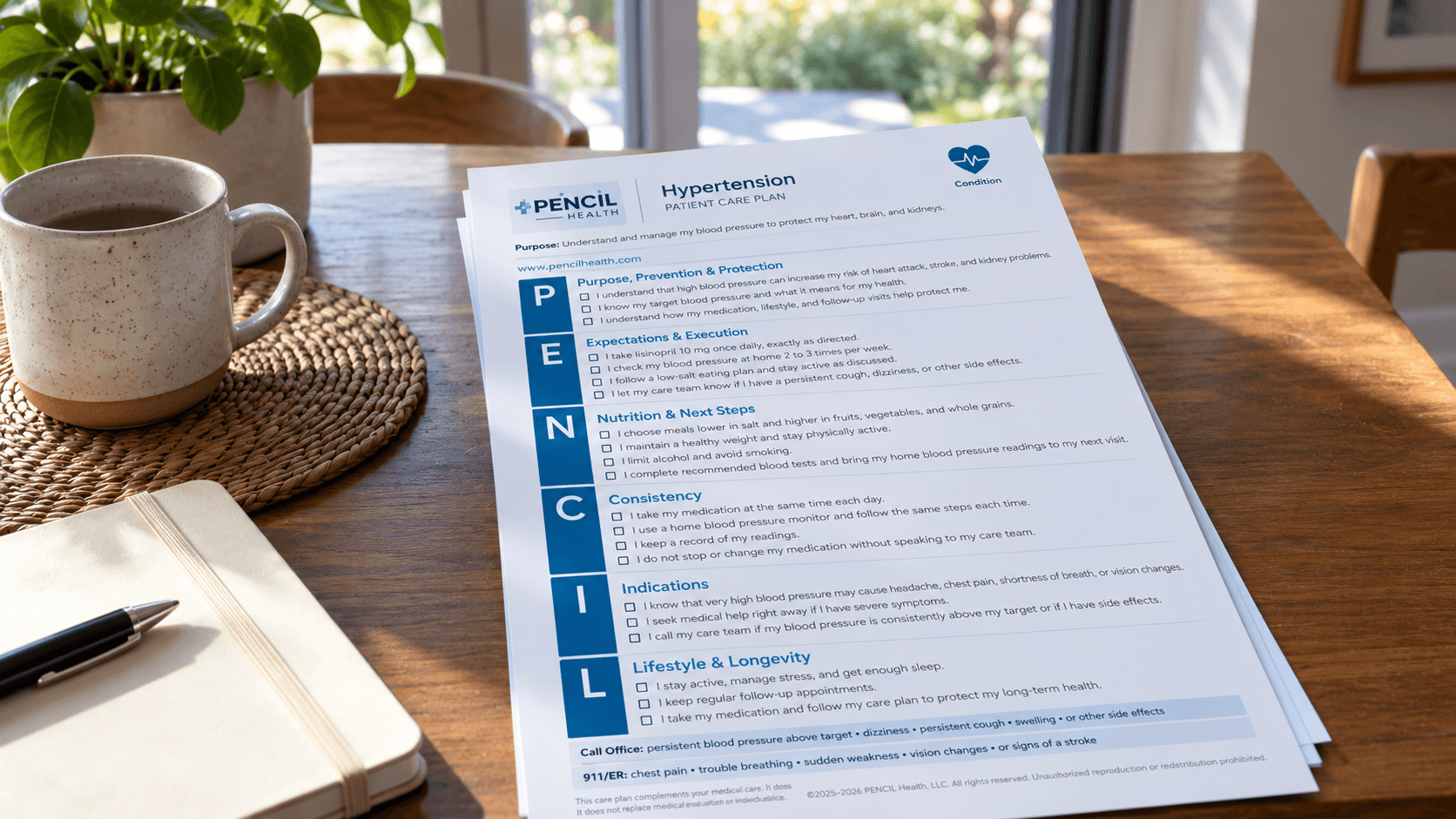
I believe better patient education starts with four practical standards: Relatable, Readable, Actionable, and Recognizable. These are the four pillars behind PENCIL Care Plans. Each addresses a different part of the gap between what we explain during a visit and what patients can do afterward.
Relatable patient education speaks to the person
Medical information should feel relevant to the person reading it.
A patient who has just received a diagnosis may be wondering how it will affect work, family, sleep, or the things they enjoy. A definition of the condition is useful, but it may leave those everyday concerns unanswered.
Relatable patient education connects the medical explanation to the patient's life. It uses familiar words and a respectful tone. It gives people a place in the plan.
At PENCIL Health, first person language is part of that approach. A statement such as “I will write down my questions before my next appointment” gives the patient a clear role in their care.
The aim is to make the information feel usable and personal while preserving the clinical meaning.
Readable care plans make the message easier to understand
When clinicians speak with one another, medical terminology can save time. When we speak with patients, those same words often need an explanation.
Written care plans should use everyday language, short sentences, clear headings, and enough space for the reader to find the important information.
PENCIL Health aims for language around a third to fifth grade reading level. That is a writing goal, not a judgment about the patient's intelligence. A reading score alone also cannot tell us whether someone understands the instructions.
The Agency for Healthcare Research and Quality's Patient Education Materials Assessment Tool (opens in a new tab) evaluates both understandability and actionability. It considers everyday language, organization, and clear steps patients can take.
That distinction matters. A short handout can still be confusing. A longer explanation can be useful when it is organized well and answers the questions the patient actually has.
The standard should be whether the reader can find and explain the main message.
Actionable patient education explains what to do next
“Follow up as needed” leaves a lot for the patient to figure out.
An actionable care plan makes the next step specific. It might include:
What the patient and clinician have agreed to do.
How and when to follow the instructions.
What changes or symptoms to watch for.
When to contact the care team or seek urgent help.
When the next appointment or check in will occur.
Consider the difference between “Arrange follow up” and “My next appointment is on _____. I will call _____ if I need help before then.”
The second version gives the patient something to use.
Check boxes, spaces for personal goals, and simple trackers can help turn an explanation into a plan. The details should reflect the clinician's recommendations and the patient's circumstances.
Clear instructions are one part of supporting adherence. Cost, side effects, transportation, and competing responsibilities can still get in the way. Before assuming a patient is unwilling to follow a plan, we should make sure the plan is clear and realistic.
Recognizable care plans use a familiar structure
Patients may receive information from several clinicians over time. Each new document can ask them to learn a different way of finding what matters.
The recognizable pillar is about giving patients a familiar structure.
PENCIL Care Plans use a consistent P E N C I L framework. My aim is for patients to become familiar with the format, so they know where to look as they receive plans about different aspects of their care.
This goes beyond placing a logo at the top of a page. Consistent headings, readable type, and an identifiable source should help the patient navigate the information.
The clinical content still needs to be accurate, current, and appropriate for the patient. A familiar design supports that content; it cannot establish its quality on its own.
Make the care plan part of the office workflow
For written patient education to become routine, the practice needs a reliable way to deliver it.
One approach is for the clinician to select the relevant care plan and identify any individual instructions. The front office can then print or deliver the selected plan at checkout, with clinical questions directed back to the appropriate team member.
That handoff gives checkout a meaningful role in completing the visit. Along with the next appointment, the patient receives a plan to take home, review, and discuss with family.
The care team can also check understanding. Instead of relying only on “Do you understand?” a clinician might ask, “When you get home, what will you do first?”
AHRQ describes this approach as teach back (opens in a new tab): asking patients to explain the information in their own words to check how clearly it was communicated.
Measure delivery and understanding
A practice can start with a straightforward question: What percentage of patients leave with a relevant written care plan?
Then it can ask whether patients can explain their next step.
Those measures answer different questions. Handing someone a document confirms delivery. Hearing them describe the plan gives the team a chance to identify and address confusion.
The four pillars are the standards I want PENCIL Health to bring to patient education. Practices can use them to review their materials, ask for patient feedback, and improve their workflow.
My goal is for every patient to leave a healthcare visit with a clear written plan. Relatable enough to feel personal. Readable enough to understand. Actionable enough to follow. Recognizable enough to use again.
Explore PENCIL Health and help make a written care plan part of every visit.
Let's Complete the Care.