Verbal Instructions and Written Instructions: What Studies Show
Most patients who misunderstood did not know they had misunderstood.

A patient nods through the discharge instructions, signs the form, and walks out to the parking lot. An hour later, a family member asks what the doctor said about the follow up.
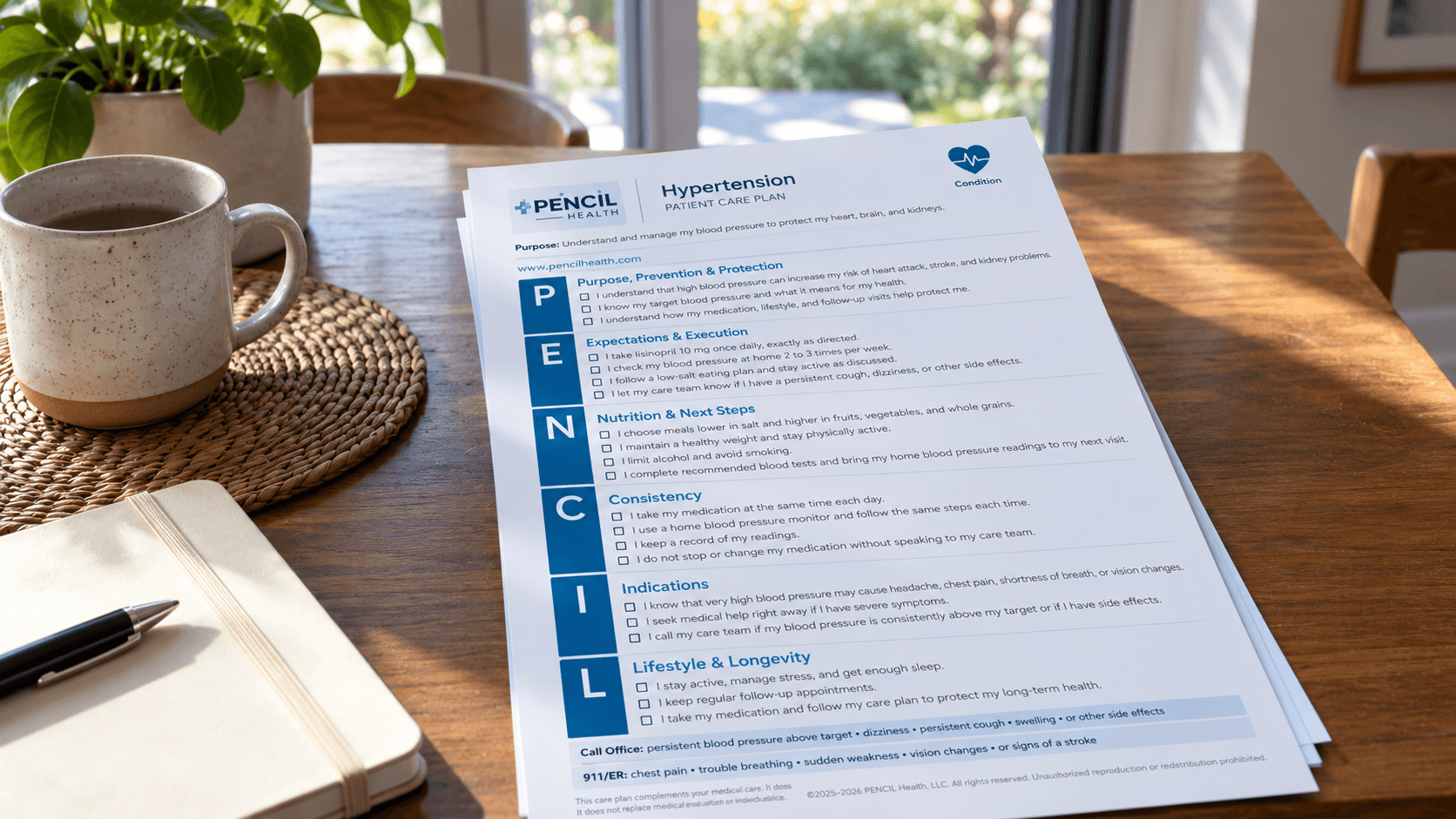
Giving written instructions along with verbal instructions appears to help patients, but the evidence is thinner than the advice suggests. The trials of written plus spoken information found better knowledge and satisfaction, in a small number of studies. Pooled recall was higher with written instructions, though not significantly. The benefits on readmissions come from packages of discharge communication, not from paper alone.
Each of those findings comes from a different kind of study.
Spoken instructions alone often do not land
In 2009, Engel and colleagues interviewed 140 adults after emergency department discharge (opens in a new tab) and compared what they recalled with what the chart said. Seventy eight percent showed a gap in understanding in at least one area. More than a third of those gaps involved care after the visit, the instructions themselves.
The most striking finding was this. When patients had misunderstood, they recognized it only 20 percent of the time.
Most patients who misunderstood did not know they had misunderstood.
That is why asking "Do you have any questions?" is not enough, and why the teach back method asks the patient to explain the plan instead.
What trials of written plus verbal instructions found
The most direct question is whether adding written information to the conversation helps. A Cochrane review by Johnson and colleagues set out to answer it in 2003 (opens in a new tab), for patients going home from hospital.
It found only two trials that qualified, too different to combine. Both involved parents of children discharged from children's hospitals, 197 in the United States and 123 in Canada. In both, verbal plus written information significantly increased knowledge and satisfaction scores. The reviewers could not assess readmissions, recovery or adherence, because no qualifying trial had measured them.
A later meta analysis looked at recall. Hoek and colleagues reviewed 51 studies of discharge instructions in the emergency department (opens in a new tab). On average, correct recall was 47 percent with verbal instructions only, 58 percent with written instructions, and 67 percent with video.
Those differences were not statistically significant overall, and the confidence intervals were wide. Across individual studies, correct recall ranged from 8 percent to 94 percent. The authors concluded that verbal instructions alone may not be sufficient, and that adding written or video information "showed promising results."
That is a direction, not a proof.
Readmission benefits come from packages, not paper
The strongest outcome data come from studies that changed much more than a handout.
In the Project RED trial, Jack and colleagues randomized 749 adults (opens in a new tab) at one safety net hospital. A nurse discharge advocate arranged follow up, reconciled medications and taught each patient with an individualized instruction booklet. A pharmacist then called patients two to four days after discharge. Hospital use within 30 days was lower in the intervention group, 0.314 against 0.451 visits per person per month.
A 2021 meta analysis by Becker and colleagues, which I cited in the healthcare improvement we can start today, pooled trials of communication at hospital discharge (opens in a new tab). Across 19 trials with 3,953 patients, these interventions were associated with fewer readmissions, 9.1 percent against 13.5 percent. They were also associated with better adherence and higher satisfaction.
In both, the written plan was one part of a larger effort. Neither can tell us what the paper did on its own.
What the evidence supports in practice
Read together, the studies point to three things.
Say it and hand it. The combination is what the trials tested, and patients often cannot tell when spoken instructions did not land.
Put in writing what is hardest to recall later: the steps after the visit, which caused the most misunderstanding in Engel's study. Preparation before a colonoscopy, recovery after a total knee replacement, and the routine of a new warfarin prescription are good examples.
Then check. A page in the bag is not the same as a plan the patient understands.
We should also be honest about the limits. Much of this evidence comes from emergency departments and hospital discharge, not from office visits. The only randomized evidence on written plus verbal information in the Cochrane review involved parents.
Saying it matters.
Writing it down gives the patient something to take home.
Let's Complete the Care.