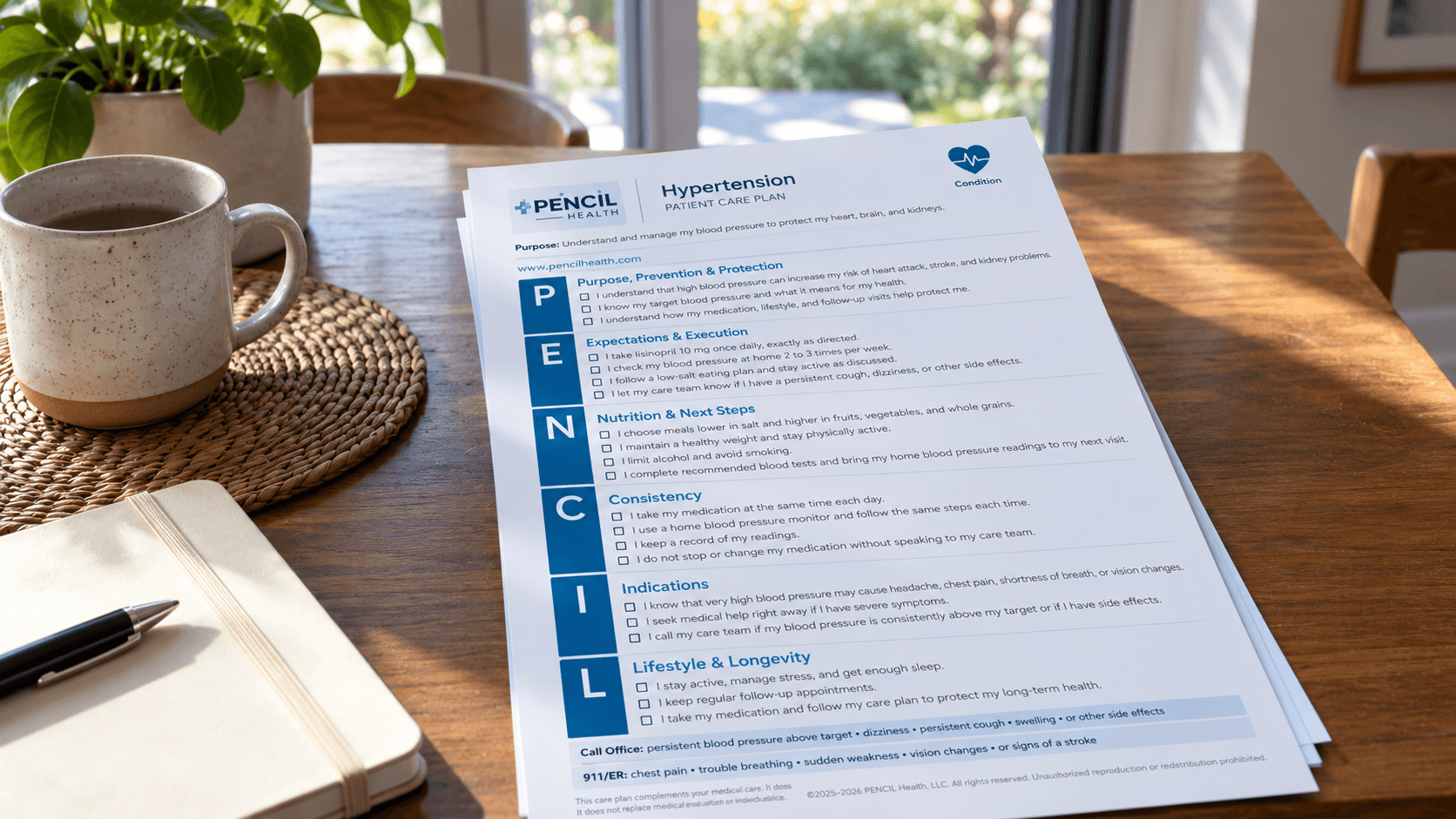
The Healthcare Improvement We Can Start Today
When a patient receives a new diagnosis, starts a new medication, or is scheduled for a procedure, they should leave with a clear, modern written care plan.

Every day on LinkedIn, physicians and healthcare leaders ask how we can change healthcare. We write about cost, access, insurance, consolidation, prior authorization, burnout, reimbursement, artificial intelligence, and the many forces that make good care harder to deliver.
Those conversations matter. The system needs thoughtful reform.
But I keep coming back to an improvement that every practice can make right now, without waiting for Congress, an insurer, a health system, or a software company to act.
When a patient receives a new diagnosis, starts a new medication, or is scheduled for a procedure, they should leave with a clear, modern written care plan.
That should be a normal part of care.
I still see patients who arrive in my office after a specialty visit unsure why a test was ordered, what a procedure will involve, or what they are expected to do next. They are people who were given important information during a stressful, brief encounter and then expected to remember it all once they walked out the door.
Medicine has built many systems around the visit. Yet too often, the patient leaves with little more than a memory of the conversation.
That is not enough.
Modern patient education should not be a generic twelve page handout, or a dense portal attachment.. It should be readable, practical, and specific to the patient’s next step. It should explain what the condition, medication, or procedure means; what to expect; what actions matter now; and when to call for help.
This is not a claim that one sheet of paper will solve healthcare’s cost crisis. It will not. But communication interventions are associated with better treatment adherence, higher patient satisfaction, and fewer readmissions in the hospital discharge setting. Personalized care planning has also shown modest benefits when it is woven into routine care rather than treated as an extra task.
The lesson is straightforward: care works better when patients understand the plan.
And it need not add another burden to the physician. A doctor can simply identify the plan a patient needs. A medical assistant, nurse, or front office team member can print it or send it securely as part of the existing workflow. The patient can read it while waiting, take it home, review it with family, and return with better questions.
That is not administrative work. It is part of the care team completing the care.
We can continue to work on the larger challenges of healthcare, and we should. We should fight for better payment models, more affordable coverage, less friction, and more time with patients. But those future goals do not change what a clinical office can do today.
A useful question for every practice may be this: What percentage of our patients leave with a clear written plan for what comes next?
In too many settings, the answer is close to zero.
Healthcare improvement does not always begin with a new law or a billion dollar platform. Sometimes it begins with a simple expectation:
Every patient deserves to know exactly what to do next.
Every patient deserves to leave with a care plan.
Reference
Becker C, Zumbrunn S, Beck K, et al. JAMA Network Open. 2021;4(8). doi:10.1001/jamanetworkopen.2021.19346.
Coulter A, Entwistle V, Eccles A, Ryan S, Shepperd S, Perera R. Cochrane Database of Systematic Reviews. 2015;(3). doi:10.1002/14651858.CD010523.pub2.