What the Front Office Taught Me About Patient Education
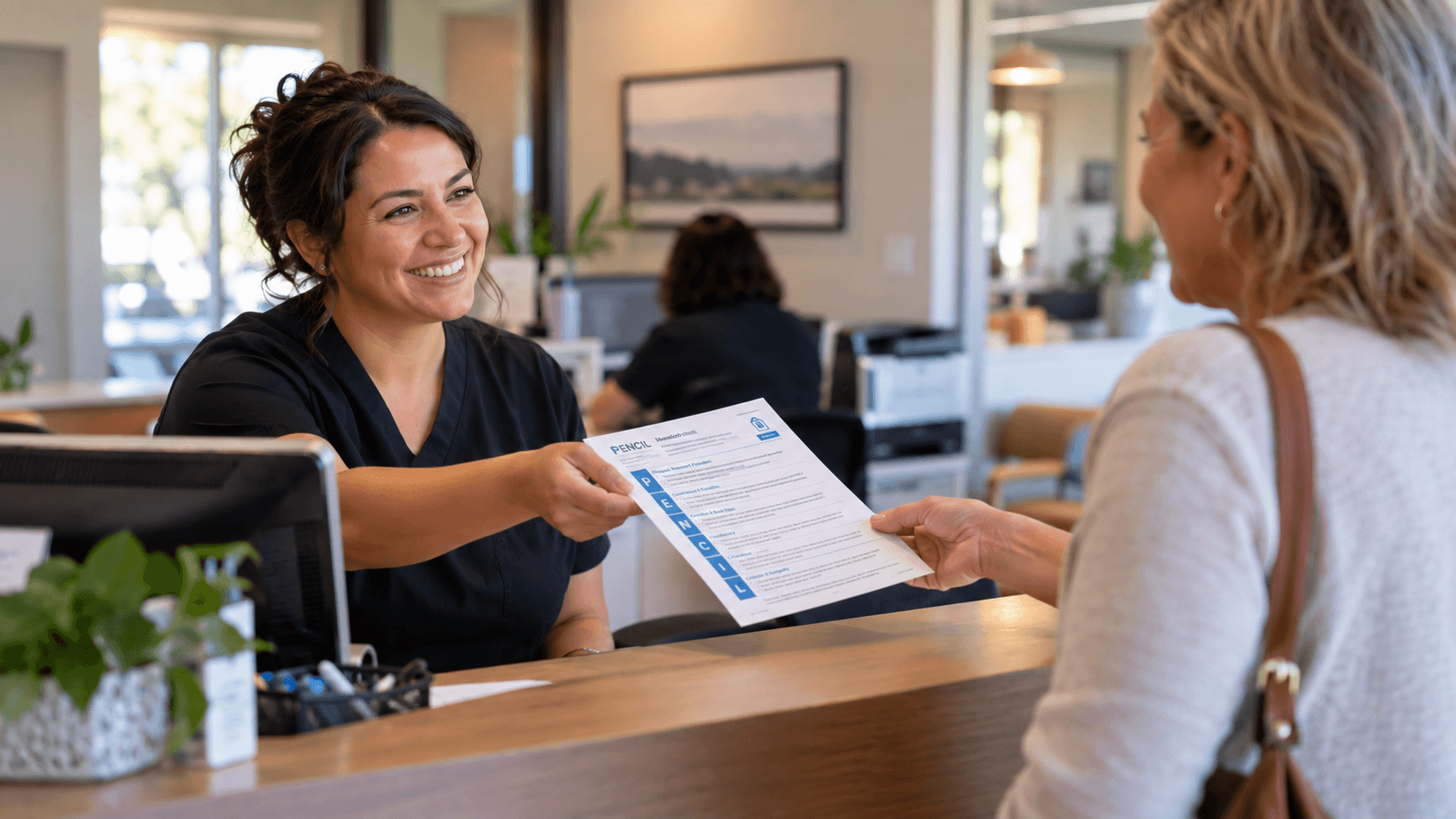
At our clinic, the step between the physician’s conversation and the patient’s dinner table often passes through the front desk.
At my previous wellness clinic, I learned something about patient education from the front office.
The people at the front desk already did a great deal for our patients. They answered calls, collected payments, scheduled follow up visits and printed receipts. Their work kept the practice moving. A receipt and a date for the next appointment could close out a visit, but neither helped someone remember what to do when they got home.
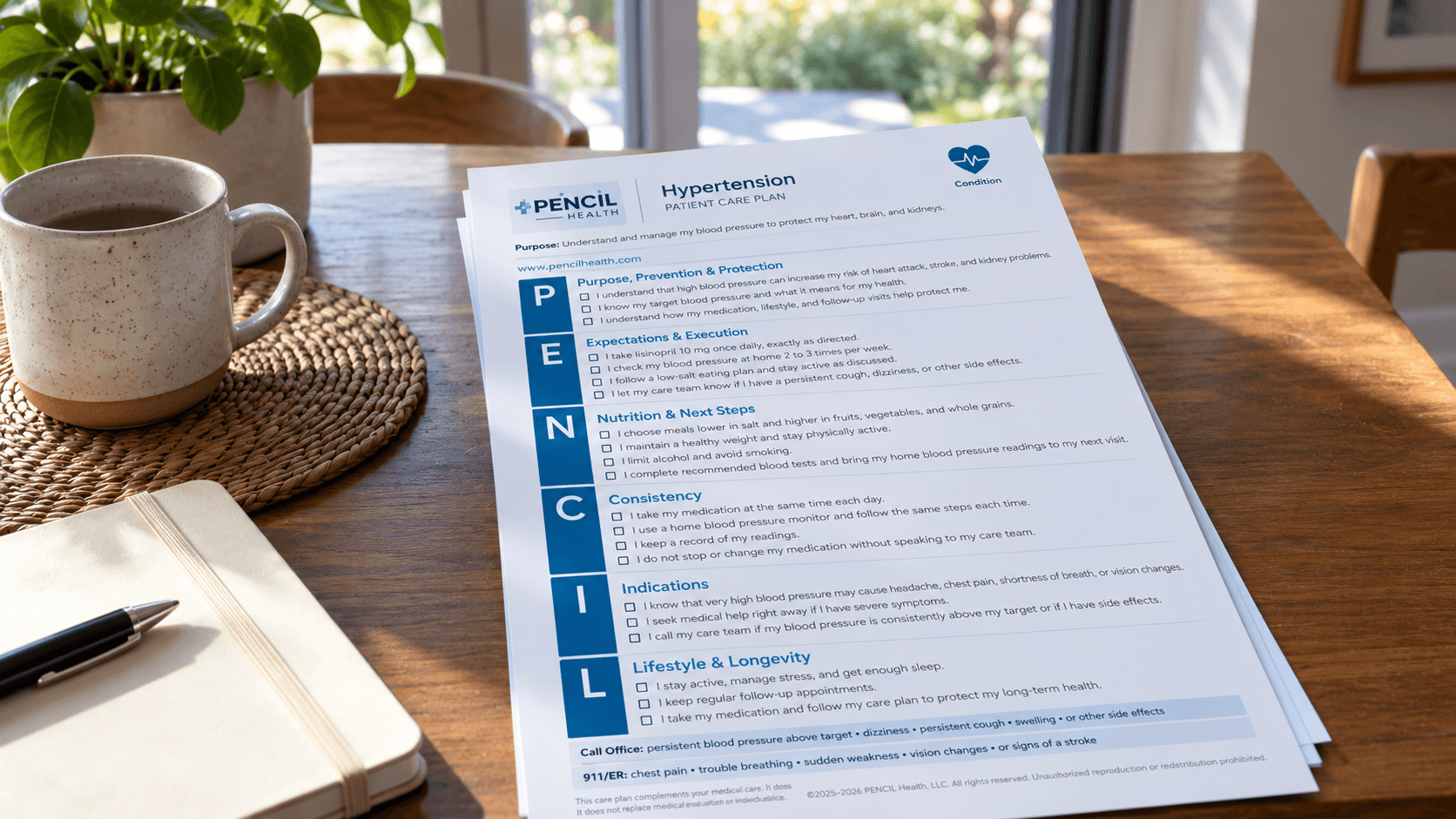
Now at my direct primary care practice, we began handing out PENCIL Care Plans, and the staff noticed a different kind of response. Patients looked at the page, recognized the topic they had just discussed and sometimes offered a simple thank you. It was a small exchange across a counter, but our staff appreciated it. They could see that the patient was leaving with something useful, and they had helped put it in the patient’s hands.
That changed the feel of the work. Giving a patient clear instructions brought a sense of accomplishment that collecting money and scheduling rarely did. Our front office felt more fully part of the care team.
It also showed me where a care plan fits in an ordinary office day workflow.
Many physicians, myself included, jot a few words on a sticky note during a visit. Patients will point to it and say, “Don’t throw that away. I want to keep it.” Those few words may be the only written reminder of what we discussed. Now we can add the names of the PENCIL Care Plans the patient needs to that same note. The patient brings it to the checkout, where the front office retrieves and prints the plans. The physician still chooses the topics, gives the medical advice and makes any instructions for that patient clear.
The note connects a clinical conversation to something the patient can take home. The staff can help deliver that education without having to make medical decisions.
One of the best reviews I have received came through a patient’s husband. He stopped by and told me his wife wanted me to know how much she liked her PENCIL Care Plan. They had discussed it at the dinner table.
That stayed with me. The plan had made it out of the office and into a conversation at home. That is exactly what I hoped it would do.
For nearly a decade, I participated in an accountable care organization. We tracked preventive measures and other markers of care. I was never asked what percentage of my patients left with a written plan they could understand and use. I think more practices should ask themselves that question.
Counting pages handed out would tell us little about understanding. Counting how often patients receive a relevant written care plan would show whether we have made it a routine part of care. Then we can ask the more important question: Does the patient know what to do next?
At our clinic, the step between the physician’s conversation and the patient’s dinner table often passes through the front desk. The person who hands over the plan is part of that care, too.